

culture in process: WHEN THE ORANGE WAS EXOTIC
Culture is a process and a practice of shared rituals and traditions. It is a means of passing on values, attitudes, beliefs and ideas. It is a source of identity both personally and publicly.
If ever there were a time to witness culture in motion on both levels in our country, it is the last two months of the year. “Culture in process” is alive and well during November and December, starting with the national holiday of Thanksgiving. It definitely is the season for sharing time, traditions, customs and reaching out at special occasions, family get-togethers, travels, etc.
While November and December are an ever-evolving display of traditions and expressions of ways to celebrate during this season, the one constant part of this time of year is the gift—’tis the season for gift-giving.
Gift-giving plays an important role in our lives, especially at this time of year. Both months are giving months. In fact, the word "gift" is central to American culture, representing much more than a simple transaction. It is a vital social tool for building relationships, expressing love, demonstrating generosity, and reinforcing community and personal bonds. The ritual of giving in November is not only about Thanksgiving, where we pay tribute to and show gratitude for the past, but it is also a time to celebrate our philanthropic spirit. We now share a specifically designated day called Giving Tuesday, following Thanksgiving. As we head into December, we see the Salvation Army Santas, the Food Bank Drive and just about every non-profit’s steady stream of mailers to our doors—and of course, there is that long Christmas list. We can even say for the seniors in our country that the RMD (Required Minimum Distribution) mandate is a national opportunity for more gift giving.
Though gift giving is often intertwined with commercialism and Christmas (oh what fun it is), the giving season has a history beyond contemporary customs. One ritual we share with the long-ago past is the Christmas Stocking. Dating to the 3rd and 4th centuries, this tradition is thought to have started with Saint Nicholas who was known as the people’s wonderworker because of his extraordinary generosity, acts of kindness, help for those in need, and many miracles during his life and after death.
Saint Nicholas’s spirit of gift-giving became legendary in his lifetime because he secretly threw stockings with gold coins through the window of a starving family’s home at night.
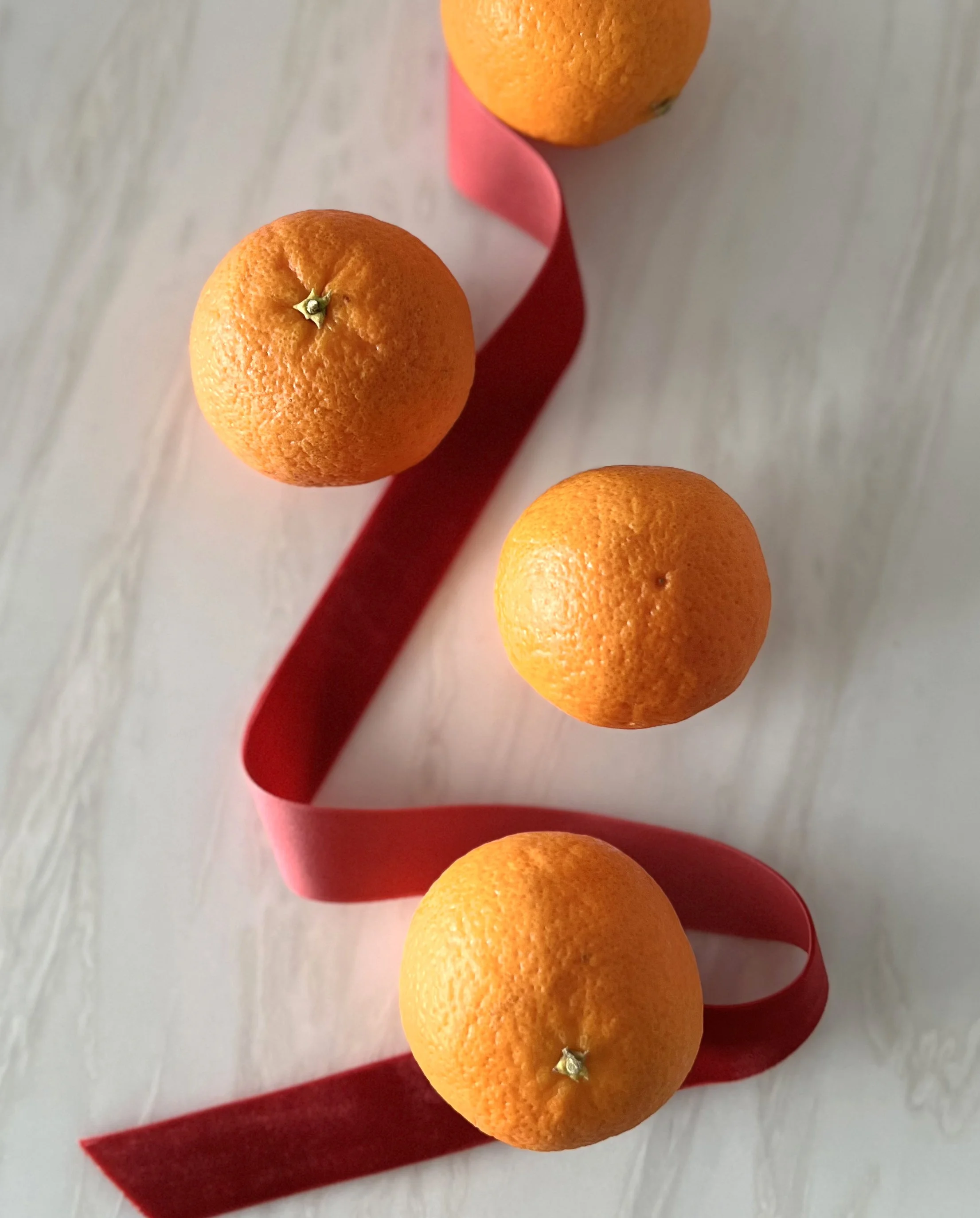
For decades, in the spirit of the stocking of St. Nicholas, households continued with some form of a stocking gift. One item made its way into the bottom of the toe when many households did not have the means to fill stockings with gold coins. Tucked away inside the bottom of the sock sat a rare winter treat—a sweet orange, a cherished offering for the Christmas gift.
Getting an orange on a cold winter day was like seeing a ray of sunshine, a rare treat, a touch of luxury. It was that simple. It was an expression of love and surprise. Finding exotic Brazil nuts, walnuts, and pecans (all needing to be cracked) added extra fun.
Our parents were part of that history and brought this tradition into for our family. For us, the stuffed stocking was placed at the end of the bed on Christmas morning (we had no fireplace mantle). While we were surprised by a few toys (to keep us occupied until it was time to get up), at the bottom of the toe, there sat the orange. The ever-present orange in the stocking toe was expected but never eaten. Back into the kitchen it always went. But its importance was tied to the story of our parents when they were young.
Our traditions today of leaving treats in fancy Christmas stockings hanging on the fireplace (or in shoes in some traditions) for someone to fill has taken off into a worldwide, lucrative and creative business. Those stockings still celebrating the “golden” orange are a tangible link to cherished memories of generations offering a simple gift of love. More than a stocking stuffer, the orange connects us deeply to their past and symbolizes the gesture and meaning behind the word “gift.”
In continuing the popularity and prominence of the orange in many cultures—besides the most important feature in the stocking custom—the orange pervades Greek baking for holidays. Countless Greek sweets contain orange juice, orange zest, orange slices, and orange liqueur. Greek pastries take center stage during the holiday season. They are the #1 gift-giving item to share with friends and neighbors, symbolizing tradition and heritage and embodying the spirit of giving. These shared traditions are definitely culture in motion, being passed down through the generations.
One treat I was honored to receive was the “trigona” (triangle) recipe passed to me through my husband’s family. Unique recipes are not easily shared, but when I was the recipient of the treasured “trigona,” I was definitely honored. This unique shared tradition, now identifies the holidays in our house. Without “trigona” on the table, the sweetness and joy of the holiday that brings people together just wouldn’t be the same.
Gift-giving traditions, as simple as a sweet orange or an orange-flavored “triangle,” strengthen the ties that bind through expressions of friendship. They deepen the generosity for our communities and even build gratitude.
Cultures worldwide exchange the sweetness of heritage and tradition though baked goods. That is how love is shared and friendships strengthened. December in America proves it!
As Valter has always said, “Food is Love.”
In fact, “gift-gifting” is “culture in process” and is important to humanity in just about every way.
Food for thought: Can you ever eat an orange without sharing its slices with one another?