

AESTHETICS SERIES No. 2 / P&R HOME PAGE / THE REEL: A Sense of Place
P&R: The Reel: Adjacent to each “Plate” slide on our home page there sits a slide of a familiar landscape. These slides represent travel experiences that shape our aesthetics and how we identify with a new place.
The mementoes we keep from past travels morph into lifetime memories, stories, and how we say who we are. Where we visit, travel and live create onsite impressions in the construction of cultural identity and convey how places have meaning beyond their geography.
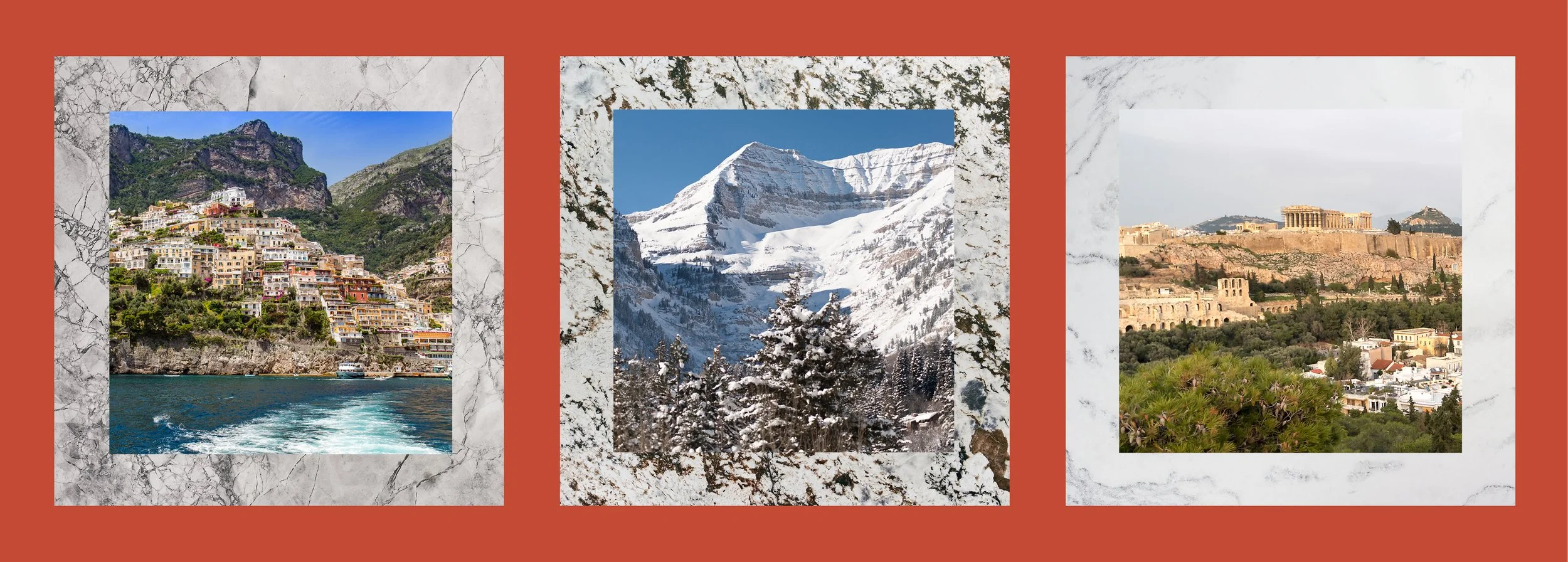
My Landscape slides include:
Slide #1: The Amalfi Coast where many of my mementoes, shown in the Plate section of the P&R Home Page, were collected on my first visit there.
Slide #2: The Wasatch Front: in the state of Utah where my ancestors found their new lives.
Slide #3: The Acropolis in Athens, Greece: both a symbol and a real place of my culture, heritage, aesthetics, and family narratives.
Consider that the large wave of European Immigrants who came to America at the turn of the 20th century brought their “sense of place” with them built from their lifetime experiences. Perhaps, if lucky, a few items would have made the trip as material keepsakes, reminding them of home. Once here, these individuals and families would re-construct their culture, traditions, and ways of life in combination with their new society. Food-ways, religion, social structures were all embedded within or alongside the new and unfamiliar Utah landscapes. A sense of their homeland was never replaced by their new home but became part of they daily lives as they made new sense who they were.
A sense of place doesn’t always have to be experienced onsite. Besides knowing the land by living there, we can also “know” places through the power of cinema without leaving home. Just by the impact of the image, film influences what we believe about and how we value places.
Film has always been a profound cultural and social influencer and a powerful means of shaping who we are but in a different way than food. Cinema acts as a social agent in representing identity through its suggestive visuals while impacting the meaning of beliefs, attitudes and values in their narratives. In addition, cinematography, with its symbolic visuals via representation and screen composition, define film’s appealing aesthetics—hence the concept of The Reel in P&R in its ongoing influence in the construction of identity and our connection with a sense of place.
Consider the reels and reels holding miles and miles of landscape scenery, often used by filmmakers as a backdrop for settings in their narratives and most importantly as characters in their plots. This is especially true of the West with filmmakers such as John Ford and Robert Redford who had a particular sense of what the West was. Ford portrayed western landscapes as an “old West” with wide open places and time standing still in such films as Stagecoach. Redford filled the screen with star power and his vision of a “New West” in movies such as Jeremiah Johnson, The Horse Whisperer, A River Runs Through It, and others, set in such landscapes as Utah, Montana, and Wyoming. Redford’s influence through film circulated a new persona for these areas, and helped make travel there popular and attractive for their recreational aesthetic.
Combined with our own experience of living in an actual place, both travel and film add information to our sense of place and contribute to how we make up our own minds about the value of a place.
The “literal” Plate and Reel take away: Chefs and filmmakers convey a vision in the aesthetic components of their art-forms, adding delight to our senses and taste for beautiful things. They are creatives who draw from cultural identity, personal experience, and aesthetic perspectives to make points of connection with their Audiences.
The “symbolic” Plate and Reel takeaway: The curated-plate slides on P&R’s Home Page alongside the landscape slides of places traveled and enjoyed form a narrative of ways we shape our identities and construct our cultural aesthetics, ranging from objects we collect and keep to places we know and see—whether onsite or through entertainment like film. These influences are all part of how we create and construct a lifestyle. Embedded in that process lies the role of food and film.
Author / Elaine M. Bapis